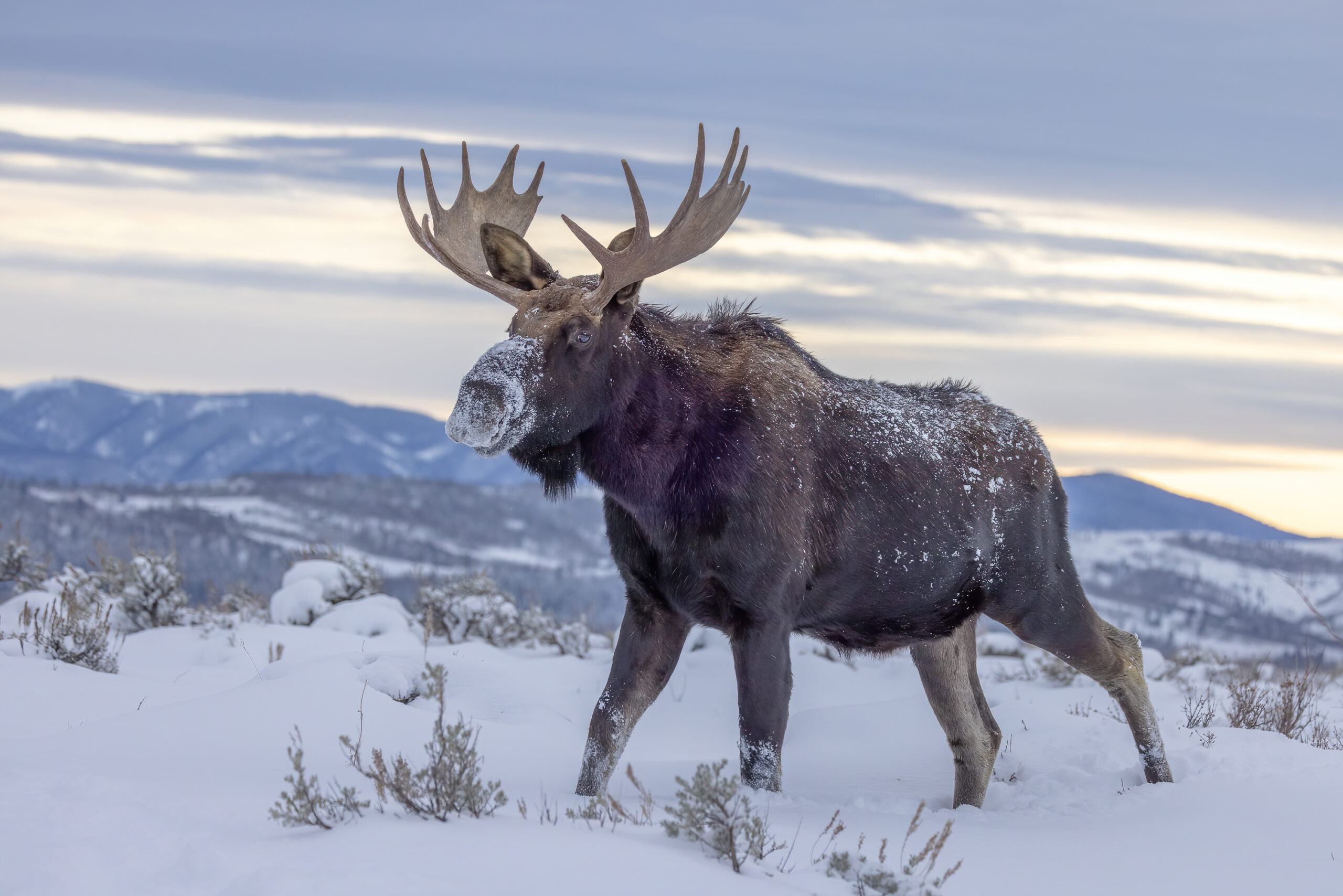
The heavy snow of a Swan Valley winter transforms the landscape into a canvas of stunning, pristine beauty. For riders who rent a snowmobile from Joyride Rentals, accessing this vast terrain is an unparalleled rush. Yet, with that freedom comes a critical responsibility: minimizing your presence and actively protecting the delicate wildlife that calls this snowy environment home.
Idaho’s winter wilderness is a fragile and challenging ecosystem. When we head out onto the trails of the Targhee National Forest, we are guests sharing space with animals that are struggling to conserve every ounce of energy needed to survive the harshest months of the year. Being a responsible rider is not just about staying safe—it’s about ensuring the silent majesty of Idaho’s backcountry remains untroubled for generations to come.
The Energy Equation: Why Every Disturbance Matters
In winter, every calorie is precious for local species like moose, elk, deer, and coyotes. Deep snow makes travel incredibly difficult, and natural food sources are scarce. Any unnecessary disturbance—like being startled by a passing machine and forced to bolt—causes an animal to burn vital energy reserves it desperately needs to maintain body temperature and survive until spring thaw. As conscious explorers, our main objective is to travel through their habitat without them ever knowing we were there.
Practical Steps for Responsible Exploration
Protecting wildlife while riding requires common sense, awareness, and adherence to simple, respectful guidelines:
1. Maintain Distance and Control Your Speed
The most crucial rule in the backcountry is to manage your speed and keep a respectful distance.
- Respect Designated Zones: Always pay attention to official signage. Many Wildlife Management Areas (WMAs) and specific valleys have seasonal closures or mandatory slow zones explicitly established to protect wintering herds. These restrictions are in place to ensure the animals’ survival.
- The 100-Yard Principle: If you spot any animal, maintain a minimum distance of 100 yards (roughly the length of a football field). If you decide to stop for observation, keep your motor running at a low idle or turn it off entirely, and always use binoculars instead of trying to get closer.
- Never Harass Wildlife: Absolutely refrain from pursuing an animal to get a better photo or a closer view. If the animal shows signs of stress—head up, ears twitching, or nervous movement—you are definitely too close. Pull over, disengage the throttle, and allow them to move away naturally.
2. Adhere to the Trails, Preserve the Habitat
For experienced riders who feel the pull of untouched powder, remember that straying off-trail can cause significant, lasting damage to the sensitive ecosystem.
- Keep Your Tracks Tidy: Always stick to marked, established trails. This minimizes soil compaction, protects the fragile root systems of shrubs and trees that are essential winter forage for herbivores, and prevents unnecessary erosion of sensitive stream banks during the spring melt.
- Ride Quietly: Excessive speed and abrupt, aggressive throttle use create loud noise that travels far through the quiet winter air, causing widespread stress across the wildlife community. Ride smoothly, use gentle acceleration, and appreciate that the peace of the backcountry is its greatest asset.
The Ultimate Reward of Conscious Riding
The greatest reward for being a responsible rider is the opportunity for genuinely authentic wildlife viewing. By riding quietly and consciously, you dramatically increase your chances of witnessing a moose foraging peacefully in the thickets or a herd of elk grazing in a protected valley. These are the truly magical, indelible moments that define a successful Idaho winter vacation.
At Joyride Rentals, we equip every rider with the necessary safety gear and a reliable GPS. We encourage every customer to use that navigation not just for self-guided freedom, but as a crucial tool for adherence—ensuring you stay within designated routes and away from sensitive, protected zones.
By practicing responsible riding, you ensure your thrilling adventure contributes directly to the conservation of the breathtaking Idaho wilderness you came here to enjoy.