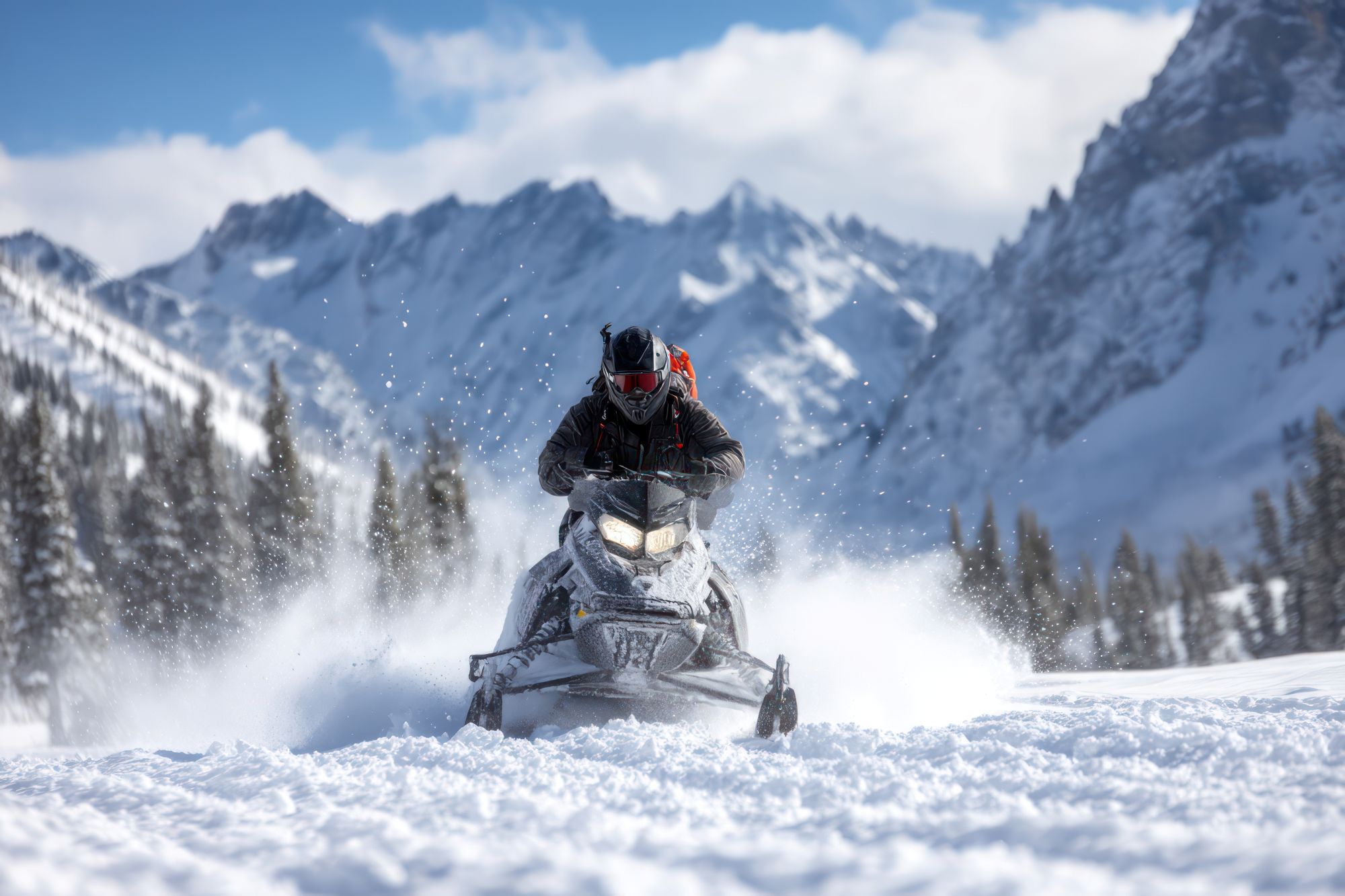
Your Pre-Ride Snowmobile Checklist and Backcountry Safety Mindset
The moment that deep, fresh snow blankets the Swan Valley, the itch to fire up the sled is immediate. Here at Joyride Rentals, we share that excitement—it’s what we live for. But the massive mountain terrain around Palisades Reservoir demands respect. An epic day of powder chasing starts long before you hit the throttle.
Our high-performance Polaris and Ski-Doo sleds are meticulously maintained, but your safety is a two-part system: our machine plus your preparation. Use this essential checklist to confirm you’ve got both ends covered.
Part 1: The Rider’s Walk-Around (A Quick Inspection)
Before rolling out, pause for this quick, focused inspection of your machine. It only takes a few minutes, but it’s the most critical safety check you’ll do all day.
The Controls and Cut-Offs
Tether Test (The Lifeline): The safety tether’s cap must be securely connected to the cord attached to your jacket. Pull it off the post to ensure the engine immediately kills. If you take a tumble, this feature prevents a runaway machine.
Throttle and Brake: Give both the throttle and the brake a smooth squeeze and release. They should snap back to the neutral position without fail. Check your brake light: does it activate properly when the lever is pulled?
Steering Check: Turn the handlebars fully to the left and right. There shouldn’t be any resistance, binding, or noticeable slack. You need precise control when navigating the tight trails outside of Swan Valley.
Eyes on the Tank: Our team verifies the fuel and oil, but confirms you’re starting with a full tank and know your exact fuel range. There’s no easy hike out of the backcountry on an empty tank.
The Undercarriage and Structure
Skis and Track: Quickly clear any large chunks of ice or debris from the running boards and the track itself. Look for any noticeable tears in the track paddles (lugs) or excessive wear on the skis’ runners (carbides).
Storage Secure: If you’re carrying extra fuel, a shovel, or even just snacks, make sure all storage compartments, especially tunnel bags, are latched down tight.
Part 2: Gear, Mindset, and the “Big Three”
If your riding plan involves anything steeper than a gentle hill—especially in Idaho’s mountains, where deep snow can accumulate—you must adopt the backcountry mindset. This includes carrying the Big Three avalanche rescue tools.
The Avalanche Essentials
Every single person leaving the groomed trail network and entering challenging terrain needs this gear —and, critically, needs to know how to use it.
Beacon (Transceiver): This electronic device, which must be worn under your outer layer and turned on at the trailhead, transmits and receives radio signals. It’s the tool that locates a buried rider.
Probe: Once the beacon gets you close, this long, collapsible pole is used to pinpoint the victim’s exact location beneath the dense, heavy debris.
Shovel: Avalanche debris sets up hard, like concrete. You absolutely must have a metal-blade shovel to dig quickly. Minutes—not hours—are the difference between life and death.
Our Promise: We make it easy by providing high-quality, reliable avalanche packages for rent. We also equip you with premium FXR riding gear, ensuring you stay dry, warm, and insulated against the harsh mountain cold.
Survival Kit & Communication
Cell service fades quickly here. You cannot rely on a phone alone.
Navigation Backup: Carry a detailed paper map and a compass, or rely on a dedicated GPS unit with offline trail maps. Tell a reliable person your specific route and estimated return time before you leave.
Survival Staples: Pack high-calorie food (energy bars, dried fruit), an insulated bottle of hot water, and a lightweight emergency bivy sack or blanket. Hypothermia is a constant threat.
The Tow Kit: Even pros get stuck. Always carry a strong tow strap and a basic tool kit (with spare plugs and a multi-tool) for minor trail-side repairs.
Know Your Limits
The most essential piece of gear you can bring is your brain. Never ride alone, and never ride beyond your experience or training level. The most effective way to avoid an avalanche is to understand how they work. We strongly encourage all riders to invest in formal avalanche training (like an AIARE Level 1 course) before venturing into uncontrolled terrain.
Be prepared, ride smart, and enjoy the untracked powder the Swan Valley has to offer. We’ll see you back at the shop!